TL;DR
Problem: Your toilet porcelain is damaged — a crack, a chip, a web of fine lines, or a surface gone dull — and every source seems to give a different answer about whether it can be fixed.
Solution: Judge by damage type. Small chips, fine scratches, surface crazing and early glaze wear are surface problems and can be filled, polished or sealed. Damage that goes through the porcelain — cracks in the bowl, tank or base — is structural, and no surface repair makes it safe.
When to call: Call a local specialist if a crack leaks, grows, sits in the tank or base, or if water has appeared on the floor. Call (714) 410-0362 during open hours.
In this guide
Ask a search engine whether toilet porcelain can be repaired and you will get two confident, opposite answers: yes, with a repair kit, and no, replace the toilet. Both are right — about different damage. Porcelain repair is not one question. It is five or six different questions wearing the same words, and the answer changes completely depending on whether the damage sits in the surface glaze or runs through the fixture itself. This guide separates those questions, so you can hold your own damage up against each one and get the answer that actually applies to it. For the hands-on repair of one specific case — a small chip in the bowl — we have a separate step-by-step guide; this page is about the judgment call that comes first.
The short answer, damage by damage
Small chip, no crack lines: repairable. A shallow crater in the surface can be cleaned, filled with a porcelain repair compound, sanded flush and sealed, and it can serve for years.
Fine scratches and scuffs: repairable. Marks that live in the glaze can usually be polished out or blended so they stop catching stain and grime.
Crazing — a web of hairline lines in the glaze: cosmetic repair only. Crazing is in the glaze layer, not through the fixture. It can be cleaned and sealed to slow staining, but it is also a sign of age, and it deserves watching.
Worn, dull glaze (what most people call worn enamel): partly repairable. Coatings and polishing improve it; nothing restores it to new. See the enamel section below for the honest limits.
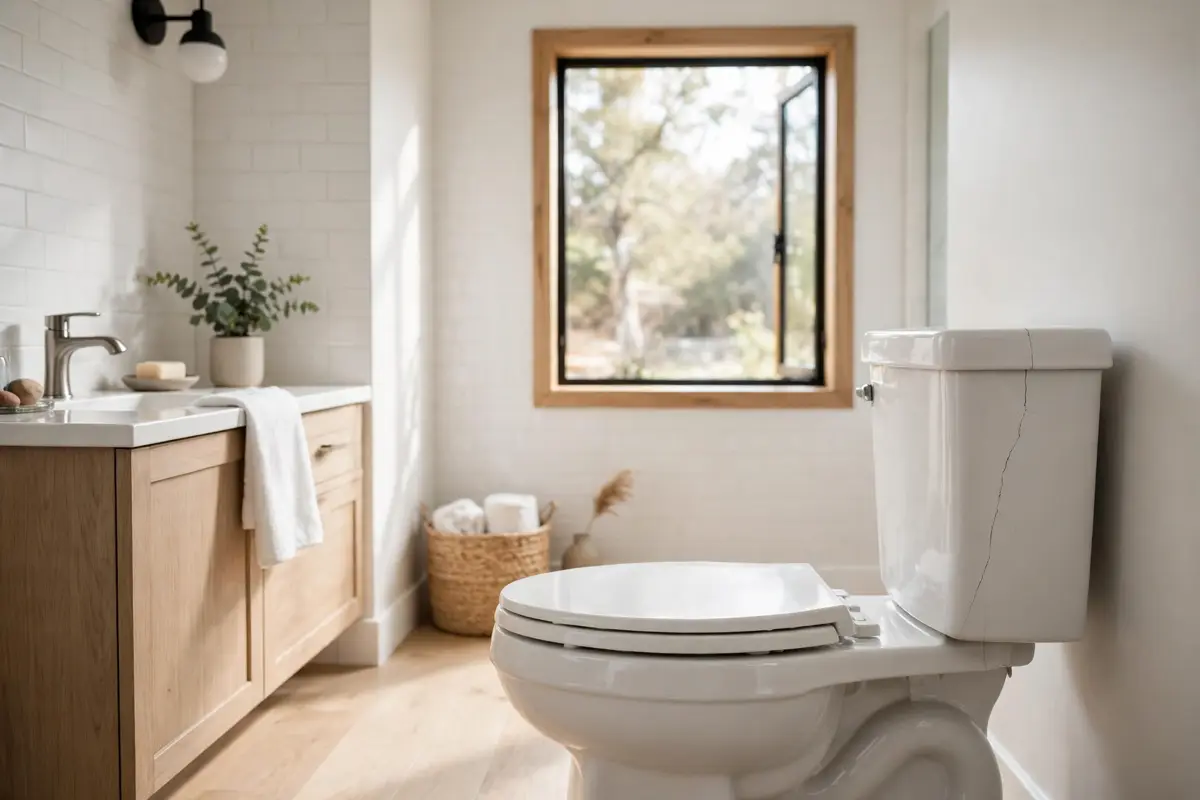
Hairline crack you can feel with a fingernail: treat as structural until assessed. If it is dry, shallow and stable it may be sealed and watched; if it leaks or lengthens, the answer is replacement.
Crack through the bowl, tank or base; any crack with a leak: not repairable. The fixture has lost its strength and its seal, and surface filler changes neither.
Know the material: porcelain, glaze and “enamel”
A toilet is made of vitreous china — a ceramic body fired until it is dense and almost glass-hard, then coated with a glaze that melts in the kiln into a thin, glass-like skin. That skin is the working surface of the toilet. It is what makes the bowl smooth, shiny, waterproof and resistant to stain; the ceramic beneath it is harder to clean and absorbs color far more easily. Nearly everything called porcelain damage is really a question about which of those two layers the damage lives in.
This is also where the word “enamel” causes confusion. Toilets are not enamelled the way a steel bathtub or an old stove is enamelled. When people say their toilet enamel is worn, chipped or peeling, they almost always mean the glaze. That matters because products sold for enamel repair are surface coatings — they sit on top of the glaze rather than becoming part of it — and their lifespan follows from that. Understanding the two layers turns a confusing shelf of products into a simple test: does this fix work on the skin, or does my problem go deeper than the skin?
Damage that can be repaired
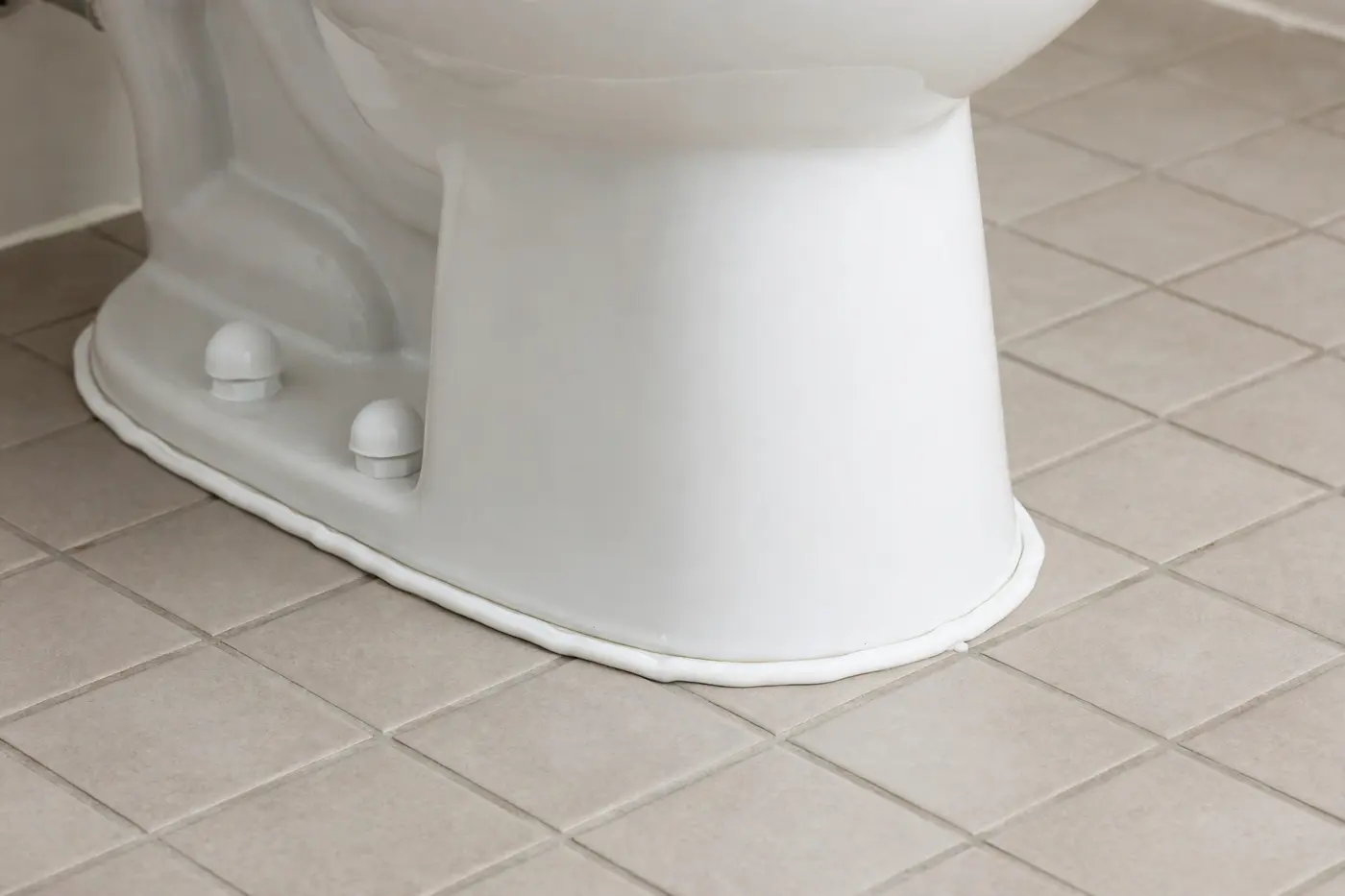
Surface damage shares three traits: it does not leak, it does not move, and the porcelain around it is sound. Chips from a dropped bottle, scratches from a metal tool, crazing on an older bowl, and glaze dulled by years of hard water and cleaning all qualify — with the chip being the most involved of the group. Our chip repair guide walks through that repair step by step; the short version of any sound surface repair is the same four moves:
Clean and dry the damaged area completely
Scrub away soap film, mineral scale and loose fragments, then let the spot dry fully. Repair compounds bond to sound, dry porcelain; anything trapped under the fill — moisture, grit, a loose sliver — becomes the point where the repair fails first.
Fill in thin layers, slightly proud of the surface
Press a two-part epoxy porcelain compound into the damage in thin layers rather than one thick lump, overfilling very slightly because the material shrinks a touch as it cures. Thin layers cure harder and hold their edges better.
Cure fully, then sand flush
Wait out the full cure time on the packaging — sanding a soft fill tears it. Wet-sand with fine waterproof paper until a fingertip dragged across the patch cannot find its edge, keeping the sanding tight to the patch so you do not dull healthy glaze around it.
Seal and test through normal use
Apply the sealer or topcoat from the repair system if one is included, refill, and flush normally. Recheck after a day and again after a week: a holding repair stays smooth and keeps its color, while a dark line creeping around the edge means water is getting behind the fill.
Crazing deserves one extra note. Those fine webs appear as glaze and body age at slightly different rates, and in a dry, non-leaking bowl they are mostly a staining problem — the lines grab color and make the bowl look tired. Sealing slows that down. But crazing plus any leak, or crazing on a tank, moves the fixture into the next section's territory, because you can no longer be sure the lines are only in the glaze.
Damage that cannot be repaired
A through-crack defeats repair for a physical reason: the crack is alive. Every flush sends a pressure pulse through the bowl; every use puts weight and micro-flex into the base; warm and cold water cycle the material daily. A crack responds to all of that by growing, slowly and silently, while a filler sitting on the surface does not move with it. The fill can look perfect on the day it is applied and be bridging a wider crack a month later.
Location makes some cracks dangerous rather than merely unfixable. A tank crack sits above several gallons of stored water; when it lets go, it lets go all at once, onto the floor. A crack at the base undermines the one part of the toilet that carries the user's weight and holds the wax seal — a failure there is a leak and a stability problem together. A crack at a bolt hole is under constant mechanical load. And a bowl crack below the waterline weeps steadily into places you cannot see, which is how a "small crack" becomes a rotted subfloor. None of these are judgment calls. If you find one, shut the water off at the supply valve, leave the fixture alone, and arrange replacement — our toilet replacement page explains how that visit runs, including the flange check while the old toilet is lifted.
Can worn toilet enamel be repaired?
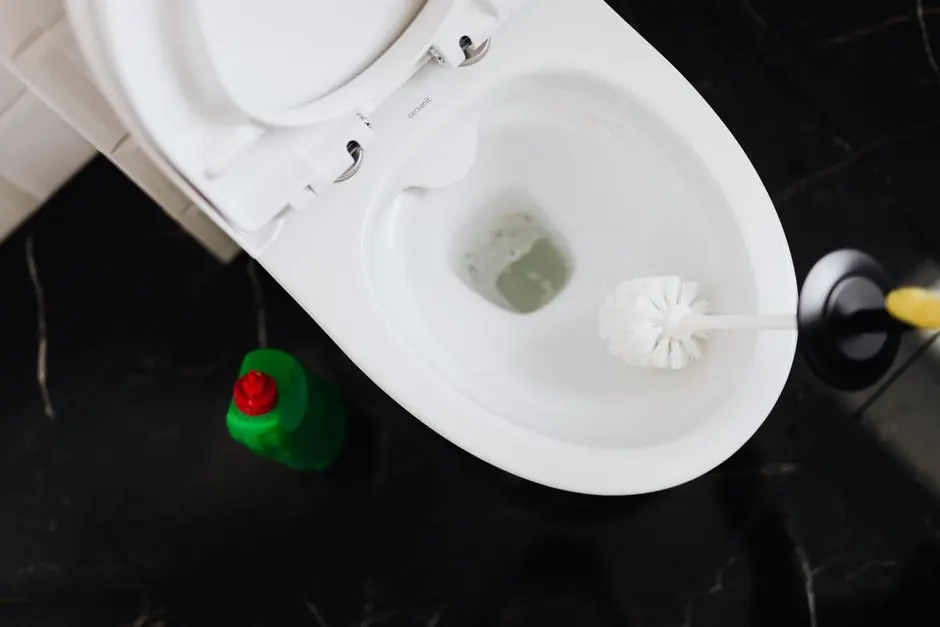
This question — can you repair toilet enamel — usually comes from a bowl that no longer cleans up properly: it feels rough, stains within days, and has lost the deep shine of the matching tank lid. What has happened is glaze wear. Years of abrasive cleaning powders, stiff brushes and Fountain Valley's hard water gradually thin and dull the glass skin, especially along the waterline and in the bowl's traffic path. Once the glaze is thin, the surface holds onto mineral color and grime the way unglazed ceramic does.
Two things are worth separating before you buy anything. First, some of what looks like worn enamel is actually mineral film — a hard, rough deposit sitting on top of intact glaze. Film can be removed with patient, non-abrasive descaling, and the glaze underneath turns out to be fine. Our hard water guide shows how to tell the difference. Second, true glaze wear can be improved but not reversed: polishing compounds can level light scratching, and enamel-style coatings can lay a fresh film over a dulled surface. Inside a bowl, though, that film faces water, brushes and cleaning chemicals daily, and it wears in patches — often looking worse in year two than honest dull glaze did. Coatings make the most sense on outer surfaces, like a dulled tank or bowl exterior, where wear is gentle. For a bowl interior that stains within days despite proper cleaning, replacement is the repair that stays repaired.
The repair-or-replace decision
When the damage itself allows either path, decide on the whole toilet, not just the damage. Add up what else the fixture needs: a weak flush from worn rim jets, internals that run or hiss, a base that rocks on a tired flange. Each is a modest repair alone; together they mean you would be restoring an old toilet piece by piece, and the porcelain work becomes the smallest part of the bill of effort. Age cuts the same way — porcelain that has chipped once from brittleness tends to chip again, while a ten-year-old toilet with one accident behind it usually has plenty of life left after a sound fill.
Stop point: any crack that leaks, grows, or sits in the tank or base ends the repair conversation. Shut the supply valve, keep the fixture empty and unused, and get it assessed. A photograph of the damage taken before you call helps the technician judge what to bring — and if you are weighing the choice, a local toilet repair specialist can often settle repair versus replace from a clear photo and two or three questions.
One last habit worth building either way: after any repair — or any replacement — keep hard objects off the rim and tank edges, and set bottles and tools on a towel or mat instead of bare porcelain during bathroom routines. Most of the damage in this guide arrived in a single dropped second, and nearly all of it was preventable in the same second.
Questions about toilet porcelain repair
Can a cracked toilet porcelain be repaired?
A crack that only marks the glazed surface — fine, shallow, and dry — can sometimes be sealed as a cosmetic measure and watched. A crack that runs through the porcelain, leaks, or is still growing cannot be repaired in any lasting way: filler sits on the surface while the crack keeps moving underneath it. Through-cracks in a bowl or tank point to replacement, because the fixture can fail without warning.
Can you repair toilet enamel?
What most people call toilet enamel is the glass-like glaze over the porcelain, and worn glaze can be improved only within limits. Light dulling and fine scratches can be polished or coated so the surface sheds water and stains less. A coating is a surface film, though — it wears, especially inside the bowl where brushes and water work every day. If the glaze is worn through in patches and the bowl stains within days of cleaning, the durable fix is a new fixture, not another coating.
Is it worth repairing porcelain damage on an old toilet?
It depends on what else the toilet needs. A sound toilet with one small chip is worth the hour a repair takes. A toilet with porcelain damage plus a weak flush, worn internals, or a rocking base is asking for several separate repairs, and that effort usually serves you better put into a new fixture. Age matters too: porcelain that has started chipping in several places has usually gone brittle, and the next chip is already on its way.
How long does a porcelain repair last?
A well-made fill on a small chip in a low-stress spot can last for years, because nothing pushes on it and water does not force its way behind it. Repairs at the rim, at bolt holes, or anywhere that flexes or carries load fail much sooner — sometimes within months. The honest measure is the fingertip test over time: if the patch stays flush, smooth and the same color, it is holding; if an edge lifts or a dark line creeps around it, water is getting behind the fill.
Can a cracked toilet tank be fixed with sealant?
Sealant on a cracked tank is, at best, a few hours of borrowed time while you arrange a replacement — never a repair. A full tank holds several gallons of water above floor level, and a crack that lets go releases all of it at once. If you find a tank crack, shut the supply valve, flush to empty the tank, and leave it empty until the toilet is replaced. Do not rely on a sealed crack overnight or while the house is empty.