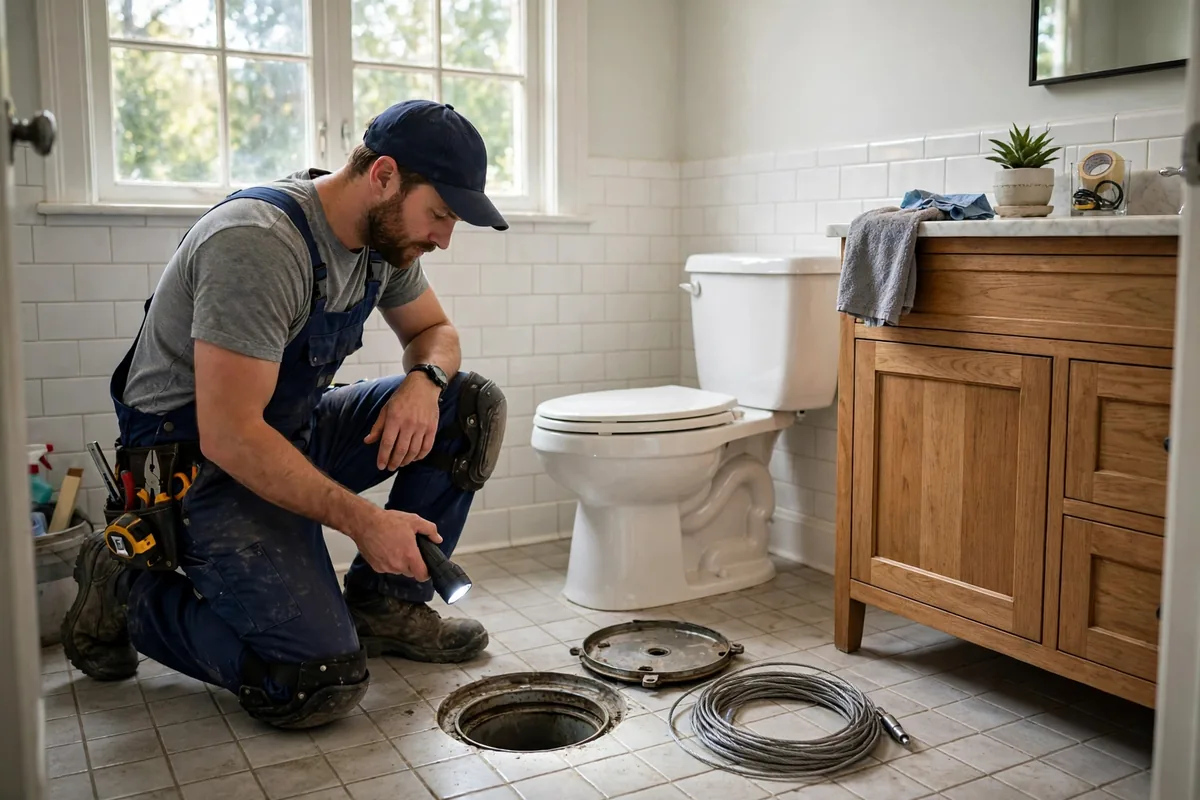
TL;DR
Problem: The toilet is not just clogged — water is coming up in the bowl, the tub, or a floor drain, and more than one fixture is misbehaving at the same time.
Solution: That pattern means the blockage sits in the main drain or sewer line, not in the toilet. Stop using water anywhere in the home, keep people and pets away from the water, and have the line checked from the cleanout. Plunging and chemical openers cannot fix it.
When to call: The same day — immediately if water is rising on its own or sewage is on the floor. Call (714) 410-0362 during open hours.
In this guide
- A backup is not a clog: the difference that decides everything
- The five signs the problem is the sewer line
- What causes a sewer line to back up
- The first 15 minutes: what to do, in order
- What not to do while you wait
- What a specialist actually does about a backup
- Your line or the city's line?
- Keeping it from happening again
A backup is not a clog: the difference that decides everything
Every toilet drains into a branch pipe, every branch pipe drains into one main line, and that main line carries everything out of the home to the street. A clog lives in the first part of that path — inside one toilet's trapway or its short branch. A sewer backup lives at the end of it. When the main line cannot move water away, the water has to go somewhere, and it comes back up through the lowest openings in the system: a ground-floor toilet, a tub or shower drain, a floor drain in a laundry room or garage.
The distinction matters because the tools are completely different. A clog answers to a plunger or a closet auger in a few minutes. A backup answers only to equipment that works the main line from a cleanout — and every hour spent plunging a backup is an hour in which the household's water keeps arriving behind the blockage. Our page on clogged toilet repair covers the single-toilet pattern in depth, including the section on telling the two apart. This guide covers the deeper problem.
The five signs the problem is the sewer line
One sign on its own can mislead; two or more together are close to certain.
- Several fixtures misbehave at once. The toilet backs up and the tub drains slowly, or the shower holds water while the sink gurgles. Fixtures that share no branch pipe can only affect each other through the main line.
- Water rises in a low fixture when another one drains. Flushing an upstairs toilet makes water appear in the downstairs shower. Draining the washing machine makes the toilet bowl bubble. Water is being pushed sideways because it cannot go down.
- Gurgling in a toilet nobody is using. Air trapped behind a blockage gets shoved through the water standing in bowls and traps. Our guide to toilet gurgling noises explains the mechanics — in a backup, the gurgling usually spreads to more than one bathroom.
- A sewer smell at floor drains or the toilet base. When the line is full, gas that should exit through the roof vent finds other paths. (A smell on its own, with everything draining well, is a different problem — see our sewer smell guide.)
- The problem returns within days of a clearing. A toilet that was augered clear and clogs again the same week was probably never the problem — the auger was treating a symptom of the line behind it.
What causes a sewer line to back up
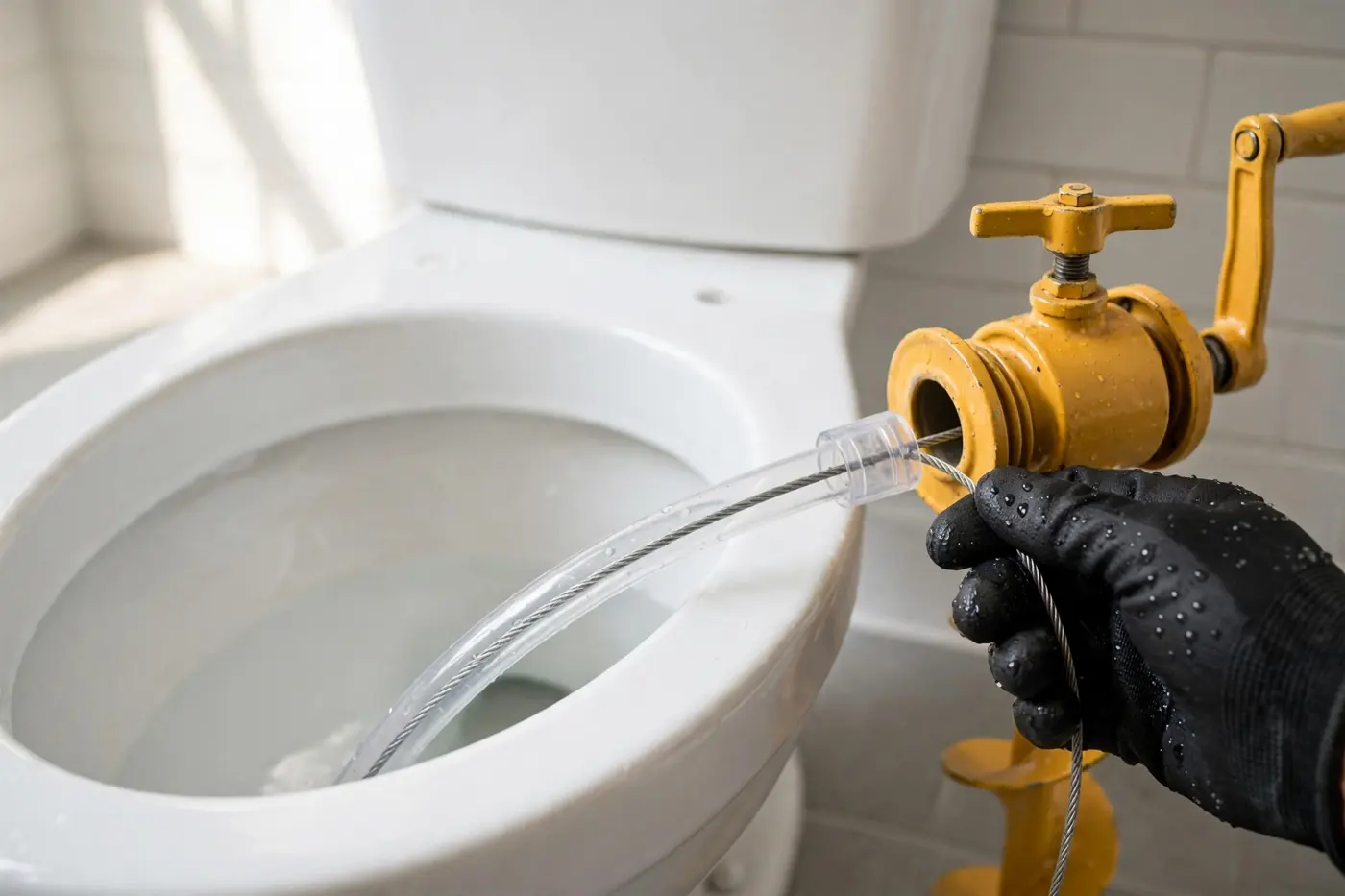
Tree roots are the classic cause in established Fountain Valley neighbourhoods. Older homes here were plumbed with clay or cast-iron laterals, and roots find the joints, grow into fine nets, and catch everything that passes until the line chokes. Root blockages usually build slowly — months of slightly slow drains — then close completely.
Grease and wipes build the second most common blockage. Grease poured into a kitchen sink cools and coats the pipe; flushable-labelled wipes do not break down the way paper does and snag on the grease and on root hairs. Either one narrows the line a little at a time until an ordinary day's water use is more than it can pass.
A bellied or broken pipe is the third cause, and the one that clearing alone cannot cure. Soil shifts, a section of pipe sags, and water pools in the low spot, dropping everything solid it carries. The line blocks at the belly again and again. This is the pattern a camera inspection exists to find.
The city main is the fourth possibility, and the only one that is not yours to fix. When a street main is overwhelmed or blocked, several homes on the street usually notice it at the same time — which is worth checking with neighbours before anyone opens a pipe.
The first 15 minutes: what to do, in order
- Stop all water use in the home. No flushing, no showers, no dishwasher or washing machine. Every litre used has to come back up somewhere.
- If a toilet is actively overflowing, close its shut-off valve — the oval handle on the wall or floor behind the bowl — then take the tank lid off and push the flapper down if water is still running into the bowl. Our overflow guide walks through this minute by minute.
- Keep children and pets out of the room and avoid walking the water through the house on shoes. Treat anything that has come up out of a drain as contaminated.
- Do not open a cleanout cap if water is standing against it — a pressurised cleanout can release a lot of water at once when the cap comes off. Looking is fine; forcing is not.
- Note what is happening where: which fixtures are affected, whether water rises on its own, and whether neighbours have the same problem. This description is genuinely useful to whoever attends — it locates the blockage faster.
- Call. A backup that is still moving water slowly may hold for a few hours; one with water rising on its own will not. During open hours, call (714) 410-0362 and describe the pattern — several fixtures, or just one, matters to what gets brought to your door.
What not to do while you wait
Do not pour in chemical drain opener. Against a main-line blockage it does nothing except sit in the standing water — where it becomes a hazard for whoever later opens the line, and can damage pipe and seals on the way. Do not keep testing the toilet to see if it has fixed itself; each test flush is two more gallons looking for somewhere to go. Do not run the garbage disposal, dishwasher or laundry "just to check" — the kitchen and laundry drain into the same line. And do not mop sewage water into other drains: scoop and bag what you can, or leave it for cleanup once the line is clear.
What a specialist actually does about a backup
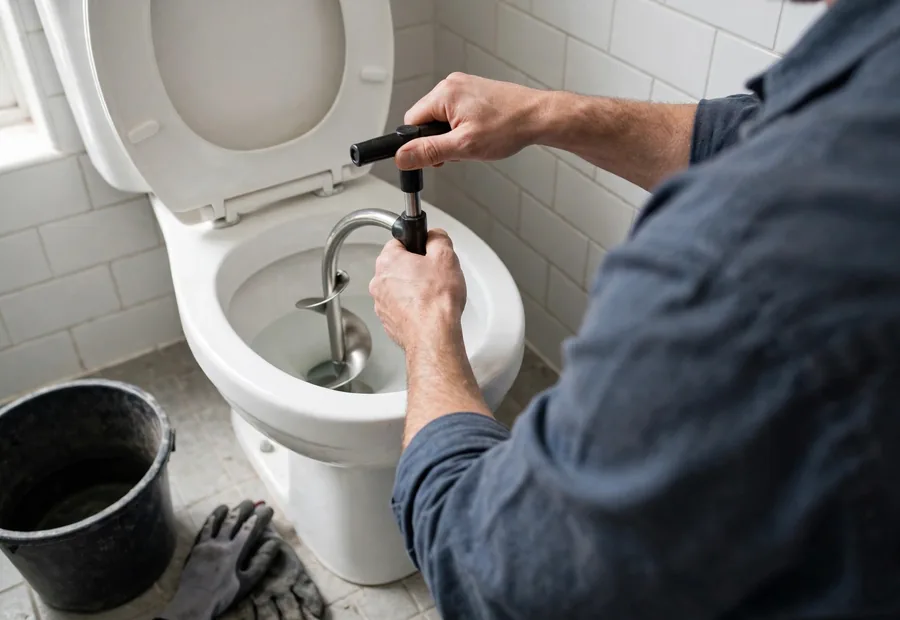
The visit starts with locating the blockage, not with clearing it. The pattern of affected fixtures, plus the state of the cleanout — standing water in it or dry — brackets the blockage between two points. From the cleanout, a powered auger or cable machine works the main line, which is a much larger pipe than anything inside the home; that is why bathroom tools cannot substitute.
Once water is moving, the honest next step on an older line is a camera inspection: a small camera travels the pipe and shows whether the blockage was a one-off mass that is now gone, roots that will regrow, or a belly or crack that will keep catching debris. Clearing without looking is reasonable for a first event with an obvious cause — a known object, a one-time overload. For a repeat backup, the camera is what separates money spent once from money spent every year.
If the line itself is damaged, the repair is scoped on what the camera shows and agreed before work starts. If the blockage turns out to sit in the city main, the job on your side stops there — you will be told plainly, and the city's crews take it from there.
Your line or the city's line?
As a rule, the homeowner's responsibility runs from the house to the point where the home's lateral meets the city main in the street; the main itself is the city's. The practical question is where the blockage sits, and there are three quick indicators. Standing water in your cleanout, with the house side dry, points downstream — toward or in the main. A dry cleanout with backups inside points upstream, into your own pipes. And simultaneous trouble at neighbouring homes almost always means a shared problem. A specialist can confirm with the cleanout and, if needed, the camera — before any repair is quoted, not after.
Keeping it from happening again
Most prevention is unglamorous. Only paper goes in the toilet — wipes labelled flushable are the single most common thing found in residential blockages. Grease goes into a container and the bin, never the sink. If your line has roots and has been cleared once, a planned re-check on a schedule beats an emergency call on a holiday weekend; roots regrow into the same joints at a predictable pace. And pay attention to the early warnings — a gurgle here, a slow tub there — because a main line almost never fails without rehearsing first. Catching it at the rehearsal is the difference between a clearing and a cleanup.
If the pattern in your home matches this guide — several fixtures, water moving the wrong way, smells at the drains — treat it as a line problem from the first minute. Our emergency repair page explains how urgent calls are sorted during open hours, and one call to (714) 410-0362 connects you with a local specialist who can find where your line is blocked.
Sewer backup questions, answered plainly
Can a sewer backup clear itself if I wait?
No. A light paper clog inside one toilet can soften and pass, but a sewer backup means the main line out of the home is blocked or overwhelmed, and nothing about waiting clears it. Every flush, shower and washing-machine cycle adds more water behind the blockage, and that water comes back up through the lowest fixtures. Stop using water, and get the line looked at — the situation only moves in one direction on its own.
Is sewage backup in the toilet dangerous?
Treat it as a health hazard, not just a mess. Water that has come back up a sewer line carries bacteria, and it should not be handled bare-handed or left sitting on floors, where it wicks into grout, baseboards and underlayment. Keep children and pets out of the room, ventilate if you can do it without spreading water around, and clean hard surfaces properly once the line is cleared and the water has stopped coming up.
How do I know if the blockage is in my line or the city's line?
A useful first test is your cleanout, if you can open it safely: standing water in the cleanout points to a blockage between the cleanout and the street or in the city main, while a dry cleanout with backups inside the home points to a blockage on the house side. Neighbours help too — if the homes next door are backing up at the same time, the problem is usually shared. The specialist who attends can confirm which side it sits on before any digging or major work is discussed.
Will plunging fix a sewer backup?
Plunging a toilet against a blocked main line does not clear the line — it just pushes water around inside the system, and the pressure often sends water up into a nearby tub or shower instead. A plunger is the right tool for a blockage inside one toilet's trapway. When several fixtures are involved, leave the plunger in the cupboard and treat it as a line problem from the start.
Does a sewer backup mean my pipe is broken?
Not always. Many backups are blockages — roots that have crept into a joint, grease built up over years, or wipes and objects that should never have been flushed — sitting inside a pipe that is otherwise sound. A backup can also be the first sign of a bellied or cracked line, which is why a camera inspection matters after the water is moving again: it separates a pipe that needs clearing from a pipe that needs repair, so you only pay for the problem you actually have.
How quickly does a sewer backup need attention?
The same day, and sooner if water is actively rising. A backup that is left while the household keeps using water turns a line clearing into a cleanup job as well, because every litre has to come back somewhere. If water is coming up on its own without anything being used, or sewage is on the floor, treat it as an emergency: stop all water use in the home and call during open hours right away.